You are looking forCreative and full of ideas
What I bringI am creative, full of ideas and inventive
EvidenceI develop my own ideas into working projects and prototypes in electronics, programming, AI and practical technical systems.
Alex TechLab Portfolio
Developer / Technician
Practical technology, electronics, programming and interactive solutions.
Electronics • Arduino • ESP32 • Raspberry Pi • Python • AI • LoRa
Created especially for this application
My background combines practical electronics, electrical systems, IT, programming, troubleshooting, maintenance and hands-on prototyping. I enjoy building, creating and developing solutions both digitally and practically, especially when a real problem or an idea can be turned into something that works in practice.
I work across both hardware and software, including Arduino/ESP32, Raspberry Pi, sensors, relays, electronic components, networks, local systems, programming, automation and AI-assisted solutions.
Many of my projects started from a real need, a technical problem or an experimental idea. I then designed, built, tested and improved them into working prototypes. Examples include delivery and staff-management systems, local AI tools, LoRa/Meshtastic communication, electronics experiments, Raspberry Pi systems and portable energy solutions.
One of my strengths is combining different technical areas rather than working with only one part of a system. I can move between electronics, software, hardware, troubleshooting and practical construction, which helps me find workable solutions and adapt when a problem does not have an obvious answer.
The Technichus role is especially interesting to me because it combines the areas I enjoy most: building, programming, experimenting, troubleshooting, maintaining technical systems and developing interactive experiences that people can see, test and learn from.
I am also motivated by the creative side of technical work: generating ideas, improving existing solutions and turning concepts into practical experiences. This is one of the reasons I believe my background fits well with Technichus and its work with STEM, experimentation and learning.
I currently have basic knowledge and an active interest in CAD, 3D printing, laser cutting and CNC, and I would be motivated to develop these skills further through practical work in the Technichus workshop environment.
You are looking forCreative and full of ideas
What I bringI am creative, full of ideas and inventive
EvidenceI develop my own ideas into working projects and prototypes in electronics, programming, AI and practical technical systems.
You are looking forInventive problem solver
What I bringI enjoy technical problem solving
EvidenceSeveral projects began with a real problem and were built to solve it practically, including the Minikrogen Delivery Route Assistant and local technical systems.
You are looking forDigital and practical construction
What I bringI work both digitally and practically
EvidenceI combine software, electronics, microcontrollers, Raspberry Pi, sensors, relays, batteries and practical construction.
You are looking forArduino / microcontrollers
What I bringPractical Arduino and ESP32 experience
EvidenceSensors, relays, displays, motors, control logic, automation and prototype development.
You are looking forRaspberry Pi
What I bringPractical Raspberry Pi experience
EvidenceI have built and configured complete Raspberry Pi systems with Linux, hardware, cooling, storage, controllers and troubleshooting.
You are looking forElectronics and simple circuits
What I bringPractical electronics experience
EvidenceComponents, sensors, relays, microcontrollers, power modules, measurement and prototype circuits.
You are looking forProgramming
What I bringBroad programming background
EvidencePython, Flask, SQLite, JavaScript, PHP, MySQL, C#, VB.NET and web systems.
You are looking forTroubleshooting, service and maintenance
What I bringI troubleshoot and solve technical problems
EvidenceMy background includes IT support, technical service, electrical work, electronics, installation, maintenance and system troubleshooting.
You are looking forIndependent work and teamwork
What I bringI can do both
EvidenceI have worked independently on technical projects and programming, and with others in teams, service work and supervision.
You are looking forIdeas developed into reality
What I bringIdea → prototype → test → improvement
EvidenceThis working pattern is visible throughout my portfolio.
Meriting areaAI
What I bringPractical AI experience
EvidenceLocal AI assistants, knowledge bases, AI-integrated systems, automation and AI-assisted workflows.
I have basic knowledge and active interest in these areas and want to develop them further through practical work.
This website is itself one of my technical projects.
Practical Work
Mobile start screen for creating a new delivery route.
Personal customer information has been hidden in the screenshots to protect privacy.
Project 01
When I started working as a delivery driver in Härnösand, I was new to the city and did not know its 408 streets, regular customers or the fastest local routes. The other drivers had several years of delivery experience, so I needed a practical way to make fast route decisions and avoid taking orders in opposite directions.
Within two days, I planned and built an Arabic mobile delivery assistant for my own daily work. By pointing the phone camera at a receipt, the application helps extract the delivery address and order information, organize selected deliveries and remind me about important items such as drinks, sauces and the number and type of pizzas.
The system supports route grouping, map display, time and distance estimation, navigation and visual address recognition using available street or house images. It also helps identify orders that do not fit the selected route so another driver can take them.
I identified the practical problem, designed the workflow, built the application, tested it during real delivery work and continuously improved the receipt reading, reminders, maps, route selection and delivery-history functions.
The application helped compensate for my lack of local route experience, reduced unnecessary manual checking and supported faster decisions about which deliveries could be combined without wasting time or fuel.
This project shows how software, AI-assisted reading, maps and a real operational problem can be combined into a practical and interactive technical solution.
The system helped me work effectively and keep up with drivers who had several years of local experience, allowing me to prove myself in the team within a very short time.
Dashboard overview with daily work summary and key metrics.
Screenshots showing employee management, shift planning, daily and monthly views, statistics, settings, backup tools and printable reports.
These screenshots show real parts of the working application on desktop.
Project 02
I originally created this application to organize my own weekly and monthly work schedule and calculate the hours I worked.
I later developed it into a broader staff and working-hours management system where restaurant employees can be added and managed individually. The system can be adapted for other restaurants by changing the settings, business information and logo.
The application creates weekly and monthly schedules, records whether and when each employee worked, calculates working hours and uses the hourly wage to estimate earned pay. It can also generate reports, save work records and produce printable monthly work schedules.
The system can be used from a desktop computer or mobile device and can run on a local server or be deployed to an external website.
I identified the need, designed the workflow and developed the application from an initial personal scheduling tool into a configurable staff-management system. I built the employee, schedule, hour-calculation, pay-estimation, reporting and printing functions and adapted the interface for both desktop and mobile use.
The application replaces handwritten schedules, separate hour calculations and scattered work records with one organized system for employees, schedules, working hours, estimated pay and reports.
This project shows my ability to understand a practical administrative need, organize structured data and build a complete working system with scheduling, calculations, reports, printing and responsive access across different devices.
The system made it easier to plan work, track completed hours, estimate earnings and keep historical schedules available for later review or printing.
Main local AI chat interface with saved conversations.
Screenshots showing the login screen, local AI chat, personas, server and model settings, memory and privacy controls, knowledge management, programming tools and utility modules.
These screenshots show real parts of the locally hosted Angel GPT application.
Project 03
Angel GPT began as a small personal local AI assistant built around three main goals: privacy, lower long-term cost and the ability to continue working without an internet connection.
I wanted a system where conversations, files, models and personal data could remain under local control instead of depending entirely on external cloud services and recurring AI subscriptions.
The project later developed into a broader local assistant platform that can support programming, troubleshooting, writing, translation, learning, stories, emails and many other tasks. It also includes configurable personas, saved conversations, memory controls, a local knowledge library and access to tools that can assist with real work on the computer.
The application was created in Arabic because it was originally designed for my own daily use. It runs with local AI models through LM Studio and can be accessed from a desktop or mobile-friendly interface.
I designed the architecture, built the local web application, connected it to local AI models, created the chat and persona systems, implemented saved conversations, memory controls, knowledge files, attachments and administrative tools, and continuously expanded the platform with practical utility modules.
The project reduced dependence on cloud AI subscriptions, improved privacy by keeping data locally controlled and provided a way to use AI tools even when internet access is unavailable.
This project shows my ability to combine local AI, software architecture, privacy, user interfaces, databases and practical tools into one interactive system. It could also inspire educational demonstrations about how local AI models work, how instructions change behavior and how data can remain under local control.
Angel GPT developed from a small local chat tool into a personal AI platform with multiple assistants, local memory, knowledge files, configurable models and practical tools for everyday technical and creative work.
Computer dashboard for gateway, AI and system-status monitoring.
Real screenshots and hardware photos showing the LoRa devices, solar-powered field unit, mobile communication, AI replies, computer control center, node monitoring, maps, channels and power management.
These images show the working experimental prototype and its control software.
Project 04
LoRa and Meshtastic are established communication technologies, but I developed a broader emergency communication prototype around them.
I built a complete computer-based control center for monitoring nodes, private and public messaging, channels, maps, signal information, battery status and system activity.
The most important addition was an AI assistant that can communicate with users through the LoRa network. The goal was to provide useful information and simple guidance when normal internet access, mobile networks or telephone communication are unavailable.
The system can be useful as an experimental communication platform during storms, network outages or in remote areas. A solar-powered field unit allows the device to operate independently with battery support.
The prototype demonstrates how LoRa communication, local software, renewable energy and AI can be combined into one independent technical system.
Experimental prototype — not a certified emergency, medical or rescue system. AI guidance must not replace professional emergency services, medical care or official safety instructions. Weather information requires saved local data or a source available to the gateway.
I configured and tested the LoRa nodes, designed and developed the computer control center, integrated private and public messaging, node monitoring, maps, channels and battery information, and connected an AI assistant to the communication workflow.
I also built the solar-powered field enclosure and worked through connection, channel, direct-message and server-integration problems.
The project explores how people can exchange messages and receive AI-assisted information when normal communication infrastructure is unavailable or unreliable.
It also centralizes node status, message activity, locations and power information in one computer-based interface.
This project could become an interactive science-center experience where visitors send messages without the internet, observe signal range and node activity, explore solar-powered communication and communicate with an AI assistant through a low-bandwidth radio network.
It combines radio technology, electronics, renewable energy, software, mapping and artificial intelligence in a way that visitors can see and test directly.
The working prototype successfully exchanged messages between Meshtastic nodes and the control center. The AI assistant received user messages through the network and returned short replies and guidance.
The system also displayed node information, signal values, maps, battery status and solar-power monitoring.
Raspberry Pi 4 system with two wireless controllers.
Real hardware photos and television screenshots showing the Raspberry Pi 4, cooling enclosure, wireless controllers, system menus, game collections and emulated platforms.
Some interface images were photographed from a television, so image sharpness may vary.
Project 05
I converted a Raspberry Pi 4 into a complete personal retro-gaming and media system.
The system was configured with a personal library containing 14,919 game titles and more than 40 emulated platforms, covering many generations of home consoles, handheld systems and classic computers.
I installed and configured the operating system, storage, cooling, display output and wireless game controllers. The two controllers were paired and mapped inside the system for local multiplayer use.
The device uses a 256 GB memory card and includes online-update functions, game metadata, cover-art retrieval and information downloaded from supported game-database services.
The system also includes Kodi Media Center for films, music and available television or media sources.
I assembled the Raspberry Pi hardware, installed the system, configured the emulators and user interface, organized the storage, added cooling and mapped the wireless controllers.
I also configured media functions, online updates, game information and cover-art retrieval, and solved compatibility, controller and display problems during setup.
The project transformed one compact single-board computer into a unified system for many generations of games and media, instead of using multiple separate consoles and devices.
The completed system runs from the television, supports two wireless controllers and provides an organized interface for game platforms, collections, media functions and system settings.
This project shows my ability to combine hardware assembly, Linux-based systems, storage, cooling, user interfaces, controllers and troubleshooting into an interactive device.
It could also support an educational exhibition about the history of gaming technology, computer architecture, emulation, controllers and how older digital systems can be preserved and explored.
Personal experimental entertainment system. Game availability depends on software and content the user is legally entitled to use.
Wide overview of the electronics development collection.
A selection of real electronics, microcontrollers, sensors, power modules, displays, relays, interfaces and prototyping components from my personal workshop collection.
The components shown represent only part of the equipment I have used over the years. Many earlier experimental circuits and prototypes were built for personal learning and practical testing and were not photographed or formally documented.
Many earlier circuits were personal experiments and were not formally documented. The images show real components from my current development collection, not a claim that every visible component belongs to one completed project.
Project 06
Electronics and microcontroller experimentation has been one of my long-term technical interests.
Over the years I have built and tested a large number of personal circuits and small prototypes using Arduino, ESP32 and many different electronic modules. Most of these projects were created as practical experiments or hobby work rather than formal documented projects, so only a small part of that work is represented by photographs today.
My work has included sensor-based systems, relay control, displays, motors, power regulation, remote-control modules, user-input devices, wireless modules and different forms of automation.
I have also experimented with light-control systems, light tracking for solar applications, water-level and water-related measurement, touch and sound sensors, simple radar-style distance and movement experiments, and many other small electronic ideas.
For me, the important part of these projects has always been the complete process: understanding the component, building the circuit, writing or adapting the code, measuring the result, finding faults and changing the design until it works.
I independently selected components, assembled circuits, connected sensors and actuators, wrote or modified microcontroller code, measured electrical behavior and solved both hardware and software problems during testing.
A large part of my experience comes from practical experimentation: starting with an idea, building a first version, finding what does not work and improving it step by step.
The photographed components represent only part of my available electronics collection. I keep a broad range of development parts that allows me to rapidly prototype small scientific, educational and interactive systems without first having to source every basic component.
This makes it possible for me to move quickly from an idea to a working test setup.
This is directly relevant to a science-center environment because many interactive exhibits begin with exactly this type of work: a sensor, a controller, a physical action and an immediate visible response.
My experience with Arduino, ESP32 and general electronics gives me a practical base for developing small interactive stations involving light, sound, movement, buttons, displays, motors, measurements and automation.
It also means I am comfortable experimenting, repairing, modifying and combining different components when a standard ready-made solution is not enough.
Full experimental cell setup with acrylic assembly, tubing, power source and measuring equipment.
Original and enhanced documentation images showing the experimental cell, acrylic structure, insulated plate assembly, tubing, gas-separation stages, electrical connections, current measurement and practical testing.
Some original images are older and were captured during practical workshop testing. Enhanced versions are used only to improve clarity and presentation without changing the documented project concept.
Project 07
This project is a personally developed experimental hydrogen-cell and gas-handling prototype that I worked on during several separate periods.
Development progressed gradually because I did not always have enough time or financial resources for continuous testing, additional components or controlled experiments with a real engine.
The project did not attempt to invent hydrogen electrolysis. My development work focused on building a practical multi-stage cell, improving electrical isolation, reducing leakage and separating the generated hydrogen and oxygen into different final paths.
The final separation stage was designed to keep the produced gases in separate lines before later experimental regulation or use. Because hydrogen can form a highly flammable mixture when it comes into contact with air or oxygen, the prototype must be treated as an experimental system requiring controlled testing and appropriate safety equipment.
The system includes experimental gas-regulation components intended to study controlled flow. It was also considered as a basis for future research into small engines, generators or flame-based applications, but these uses were not fully tested or validated.
I designed and assembled the acrylic structure, prepared the plate system, added the electrical and rubber isolation, installed the tubing and fittings, developed the gas-separation stages and tested the prototype over several development periods.
I also investigated sealing, current flow, gas movement and practical construction problems, modifying the assembly when weaknesses appeared.
The project explored how a compact plate-based electrolysis system could be assembled with improved isolation, reduced leakage and separate final paths for hydrogen and oxygen.
It also helped me study the relationship between mechanical construction, electrical current, sealing, gas production and controlled gas flow.
The completed experimental assembly generated visible gas flow and allowed practical testing of current consumption, plate isolation, tubing, sealing and separated gas paths.
The project remained an experimental prototype. It was not tested on a real vehicle engine or certified generator because the required equipment, funding and controlled testing environment were not available.
This project demonstrates hands-on experimentation with electrochemistry, mechanical construction, electrical isolation, materials, measurement and iterative problem solving.
As a science-center demonstration, a safer low-output educational version could help explain electrolysis, gas separation, electrical current, material selection and why controlled scientific testing is essential.
Experimental prototype only — not pressure-rated, certified or approved for vehicles, generators, welding or consumer use. The gas containers did not include calibrated pressure ratings. Hydrogen can ignite or explode after mixing with air or oxygen, so further development requires proper flashback protection, pressure control, ventilation, gas detection and professional safety testing.
Project 08
I designed and tested an experimental fire-resistant material made from white glue and corn starch.
The material was exposed to a welding-gas torch during a practical heat-resistance test. The measured surface temperature reached approximately 1500°C using an infrared thermometer.
This was a personal experimental test, not a certified laboratory fire-resistance rating.
I developed the material mixture, prepared the test samples, exposed them to direct high-temperature flame and measured the surface temperature during testing.
The experiment explored whether a simple and inexpensive material mixture could delay burning and resist direct high-temperature flame.
This project can support an educational experiment about material properties, heat transfer, fire resistance and the importance of controlled scientific testing.
Multi-cell experimental arrangement with a measured voltage of approximately 13.95 V.
These are older project images that were enhanced with AI only to improve clarity and presentation. The project itself was developed in stages over several separate periods.
Project 09
Over a long period of personal experimentation, completed in stages and during separate periods, I explored different ways of producing and storing small amounts of electrical energy using simple electrochemical cells.
I tested zinc, copper, aluminum, salt water, chlorine-based electrolytes and different electrode arrangements, comparing voltage, current, stability and operating time.
A typical individual cell produced approximately 1.0–1.3 V, while selected configurations reached currents around 200 mA under my test conditions.
I connected cells in series and parallel. One photographed combined assembly shows approximately 13.95 V; this is not the output of a single cell.
The goal was practical understanding of electrochemistry, electron flow, electrode materials, oxidation, internal resistance and long-term behavior—not a commercially competitive battery.
A chlorine-water electrolyte experiment with copper and aluminum electrodes powered four LEDs continuously for more than 14 days at around 5 V. This was a personal endurance observation, not a laboratory-certified capacity measurement; exact amp-hour capacity and energy density were not determined.
I compared copper, zinc, aluminum, salt-water and chlorine-based electrolytes, other available metals and naturally available mineral or crystal materials. Results varied with electrode pair, electrolyte, surface condition and connection method.
Oxidation and gradual chemical change affected electrical output and cell lifetime. Testing different surfaces and arrangements showed the difference between a short voltage reading and a cell that remains useful under load.
I experimented with DC step-up circuits, boost converters, Joule Thief circuits, LEDs, series and parallel cells and low-power loads to understand how weak sources behave with conversion electronics and real loads.
I also investigated electroplating, including a small silver-plating test on copper involving silver-nitrate solution, to observe electrical energy driving chemical change on a metal surface.
I explored electrodes in soil, observing initial voltage, duration, moisture, electrode condition and combinations of low-output cells. These exploratory tests were not claims of replacing conventional batteries.
I learned to compare open-circuit and loaded voltage, voltage and current capability, series and parallel connections, surface condition, internal resistance, oxidation, electrolyte behavior, long-term stability, conversion losses and measurement limitations—and to ask what happens after minutes, hours or days.
I independently designed and assembled cells, selected and compared materials, measured voltage and current, connected cells in different arrangements and observed them over time.
I also integrated voltage boosters and Joule Thief circuits. The staged work was iterative: build, measure, observe chemical change, identify weaknesses, modify and test again.
The experiments explored how materials and cell configurations affect useful voltage, current, stability and long-duration behavior under real loads.
A safe science-center version could let visitors compare electrode materials, connect cells in series, observe a meter and power LEDs. It combines chemistry, physics, electronics and measurement in a visual interactive form.
It demonstrates how I learn: building, measuring and investigating why results change.
Personal experimental results — not laboratory-certified battery performance. Voltage, current and operating duration varied with materials, electrolyte, surface condition, load and configuration. Some experiments involved reactive chemicals and are documented here as technical exploration, not instructions for replication.
Front control and monitoring panel with inverter and battery displays.
Project 10
This project is a portable multi-source power system that I designed and assembled as a practical personal energy project, with assistance from my wife, who also studied electrical technology with me in Sweden.
Rather than using a ready-made power station, I built the system around separate lithium battery modules, individual voltage monitoring, selectable battery operation, DC outputs, an AC inverter, solar charging, mains charging, vehicle charging capability, cooling and electrical protection.
The system was designed so that the battery sections can be used individually or together depending on the required load. Four separate battery sections are monitored independently, allowing their voltage condition to be checked directly from the front panel.
The project combines energy storage, DC power distribution, voltage monitoring, solar charging, inverter operation and portable enclosure design in one unit.
It was primarily developed as a practical personal prototype for backup and portable power.
The system contains four individually monitored nominal 12 V lithium battery sections.
Each battery section was assembled from individual lithium cells and electrically prepared as a separate module.
The design allows one battery section or multiple sections to be selected depending on the required operating condition.
Individual front-panel voltage displays make it possible to compare the condition of B1, B2, B3 and B4 before or during use.
The photographs show example readings around 12.2–12.4 V across the four battery sections.
The system was designed to accept energy from foldable solar panels, a solar charge controller, mains electricity, a vehicle electrical supply when appropriately connected and a dedicated charge input on the enclosure. This makes the prototype useful for testing how one portable storage system can combine renewable and conventional charging sources.
The system provides 5 V USB, low-voltage DC, dedicated 9 V and 12 V outputs, application-specific low-voltage supply and nominal 230 V AC through the inverter. This supports compatible equipment such as phones, routers and small electronic devices.
The system was designed around a high-power inverter stage, with the overall portable project intended for loads up to approximately 1500 W when the battery configuration, wiring, thermal conditions and connected equipment allow it.
The installed inverter shown in the photographs is marked as a 2000 W unit; this label describes the inverter hardware and should not be presented as a verified continuous output of the complete battery system.
The enclosure provides direct visual monitoring and physical controls: four B1–B4 battery-voltage displays, battery selection, inverter input voltage/current monitoring, inverter output display, battery-level indication, fan control, status lights, DC controls, the AC inverter section, charging connection and solar controller. The layout allows important electrical conditions to be checked directly during testing and troubleshooting.
Thermal management was an important design consideration. I integrated active cooling with separate fan control and arranged the battery monitoring, inverter, charging and low-voltage sections for independent inspection. Protection and monitoring were incorporated, although this remains a personal experimental build.
Despite combining four battery sections, an inverter, monitoring electronics, charging hardware and cooling, the complete unit was built as a portable system weighing approximately 3 kg.
I designed the overall system architecture, assembled the battery sections from individual lithium cells, integrated the charging paths, inverter, DC outputs, voltage monitoring, switches, cooling and enclosure controls, and performed practical electrical testing throughout development.
The project required electrical and mechanical problem solving to arrange components, distribute power, monitor every battery section and combine the charging and output systems.
My wife assisted me during the project. We studied electrical technology together in Sweden, which made the build a collaborative practical electronics project.
The goal was to create one portable energy unit that could store energy, accept charging from different sources and provide several different voltage outputs without depending on a single fixed power source.
Instead of separate devices for solar charging, storage, DC power and AC conversion, the project integrates these functions into one portable experimental system.
This project brings together solar energy, lithium batteries, DC and AC electricity, voltage conversion, energy storage, electrical measurement, cooling and system protection.
For a science-center environment, the same principles could become a safe low-power educational station showing energy moving from solar panels into storage and different loads.
It also demonstrates my ability to combine many subsystems into one working physical device.
Personal experimental prototype — not a commercially certified power station. High-current lithium battery systems and 230 V AC inverter outputs require appropriate fusing, insulation, cell protection, thermal management and electrical safety precautions.
Profile
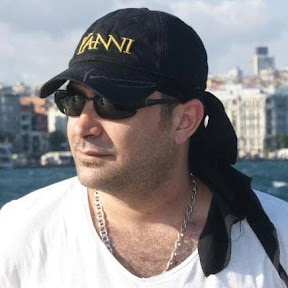
I am a practical developer and technician based in Härnösand with more than 15 years of technical background across electrical work, electronics, IT, troubleshooting, maintenance, technical support and digital systems.
My strength is the ability to work across both hardware and software. I have experience with computers and IT support, networks, cameras and alarm systems, electrical and electronic components, sensors, relays, Arduino/ESP32, Raspberry Pi and Linux, while also developing software and web solutions using Python, Flask, SQLite, JavaScript, PHP, MySQL, C# and VB.NET.
I also work actively with modern AI tools and automation. I have built AI assistants, knowledge-based systems, bots, local AI solutions and practical applications where AI is combined with software, data and real-world workflows.
My technical background includes work as an IT technician and technical support specialist, self-employed programming and digital projects, team supervision and practical service work. I am comfortable troubleshooting problems, learning unfamiliar systems, testing solutions and taking an idea from a practical need to a working prototype.
I hold an Electrician Diploma from Astar AB in Sweden, completed in 2024. My background in electricity and electronics complements my IT and software experience and helps me understand complete systems rather than only one part of them.
What interests me most is building things that people can interact with: practical technology, electronics, software, automation, experimental prototypes and technical experiences that make complex ideas easier to understand. This combination of hands-on construction, programming and problem solving is why the Developer / Technician role at Technichus is especially relevant to me.
Builds and tests real hardware/software prototypes.
Troubleshoots technical problems and develops practical solutions.
Software, web systems, databases, AI and automation.
Electronics, electrical systems, IT, maintenance and technical integration.
Experience & Education
Capabilities
Electrical troubleshooting, installation, maintenance, cabling, components, switches, basic electrical panels, sensors, relays, alarm systems and cameras.
Electronics, Arduino, ESP32, Raspberry Pi, sensors, relays, displays, motors, servos, practical prototyping and hardware/software integration.
PC building, hardware, software, Windows, Linux, networks, backup, local servers, technical support and troubleshooting.
Python, Flask, SQLite, HTML, CSS, JavaScript, PHP, MySQL, C#, VB.NET and WordPress.
AI assistants, knowledge-base systems, AI-assisted development, automation, n8n, Telegram bots and practical AI workflows.
LoRa, Meshtastic, node configuration, long-range communication and local/offline communication experiments.